

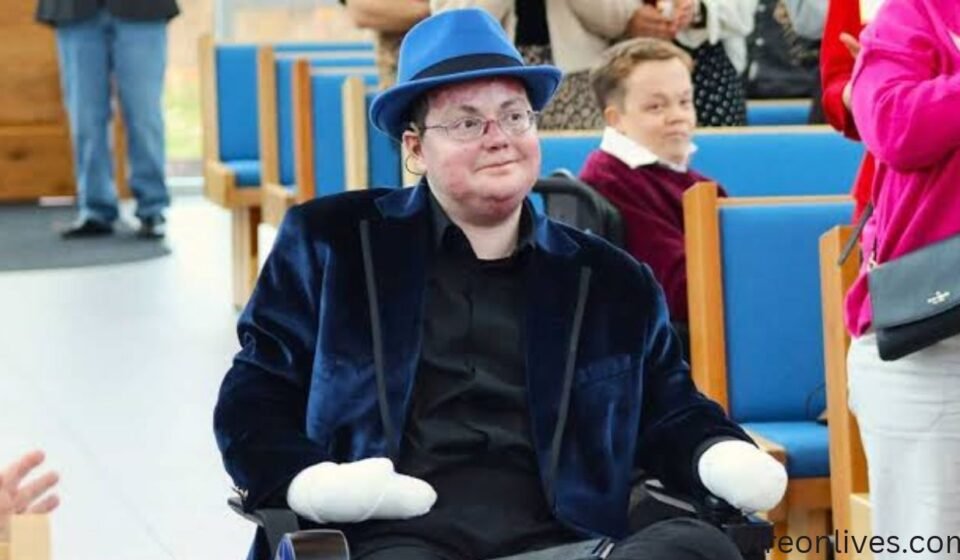

Shane DiGiovanna lived 27 and a half years with epidermolysis bullosa, a rare condition that often keeps people from reaching adulthood. He didn’t just reach it. He graduated from Rice University, helped inspire a federal bill and started a charity that brings comfort to sick children.
He died on March 30, 2026. This guide explains who Shane DiGiovanna was, how his condition shaped his days, and what his advocacy achieved in Congress and at Cincinnati Children’s. You’ll also find a quick facts table, confirmed personal details and clear ways to honor his work.
Shane DiGiovanna Quick Facts and Family
Start with the verified basics. The table below lists only details reported by Rice University, local news stations and Congressman Greg Landsman’s office. If a detail hasn’t been published, it’s left out on purpose.
| Field | Details |
|---|---|
| Full Name | Shane Patrick DiGiovanna |
| Born | 1998 |
| Passed Away | March 30, 2026, at age 27 |
| Home | Montgomery, Ohio, near Cincinnati |
| Education | Rice University, Class of 2021, Martel College |
| Condition | Epidermolysis bullosa (EB), also called butterfly disease |
| Hearing | Profoundly deaf, with cochlear implants since childhood |
| Known For | Advocacy for EB patients, the Shane DiGiovanna Act (H.R. 7877), Doggie’s Friends |
| Mother | Patsy McCormick |
| Companion | A stuffed animal named Doggie |
Shane DiGiovanna and Life With Epidermolysis Bullosa
Few conditions are as relentless as epidermolysis bullosa, or EB. The inherited disorder makes skin extremely fragile and causes chronic wounds. People call it butterfly disease because the skin is as delicate as a butterfly’s wing. Shane lived with it from birth.
Also Read:/philip-vaughn-biography/
Estimates of how common EB is vary by source. Rice University cites roughly 25,000 to 50,000 people in the United States, and it notes that many don’t survive into adulthood. Shane described EB as the worst disease you’ve never heard of, a phrase he used in local news interviews.
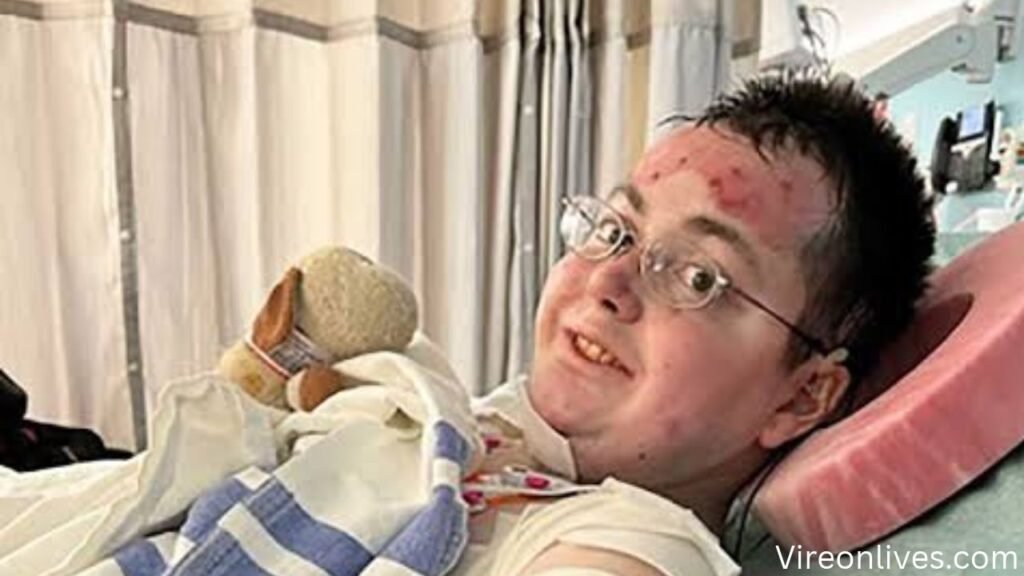
Daily care meant constant bandaging. His mother, Patsy McCormick, showed reporters how supplies arrive in boxes stacked to her garage ceiling. His life also included hundreds of surgeries, years of cancer treatment and a gradual loss of mobility, according to Rice. Yet those who knew Shane DiGiovanna describe a man who refused to let those facts define him.
Cincinnati Roots and Children’s Hospital Care
Home was Montgomery, Ohio, a suburb of Cincinnati, and the city’s hospital became a second home. Shane received care at Cincinnati Children’s, which a friend later called the place that helped make his extraordinary life possible. At 14, he joined a press conference there announcing a children’s health fund in honor of Neil Armstrong, a detail that fits his lifelong love of space.
Cincinnati also shaped his politics. He followed elections and political maps closely, and he commented on them on Twitter. That interest led him to Congressman Greg Landsman, who represents the Cincinnati area.
Landsman and Shane grew close, and Local 12 reported that they texted almost daily. The congressman said the lesson he took from their talks was simple. Always do the right thing.
Cochlear Implants and a Powerful Voice
EB wasn’t his only challenge. Shane was also profoundly deaf. He received cochlear implants as a child and learned to hear and speak through years of intensive training, according to Rice University.
His mother says he overcame so much, including profound deafness, and became an incredible speaker. That skill carried into classrooms, television interviews and congressional conversations. He told his story plainly, explained policy in everyday language and wrote about Doggie’s Friends in his own words.
His voice mattered because it made a rare disease concrete. Statistics about rare disease care can feel distant. A young man explaining what bandages cost his family, and why that cost shouldn’t decide who gets treatment, made the problem hard to ignore.
A Lifelong Dream of Attending College
College wasn’t a given for someone with EB. Shane wanted to be one of the first people with the condition to really go to college, and he said so in a video Rice produced when he arrived on campus. WKRC later reported that he became one of the first people diagnosed with EB to graduate.
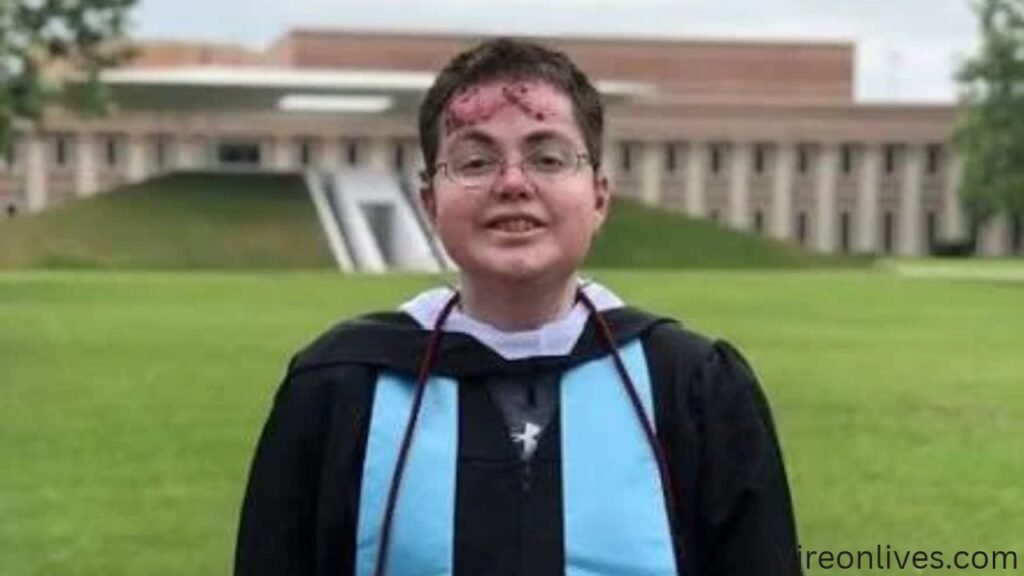
He chose Rice University for its small size, its residential college system and its strong academics. He also liked that Rice works with NASA, which suited a boy who read Cosmos at age 7 and dreamed of exploring space.
His mother says going away to college is virtually impossible for someone with Shane’s condition. For him, a real college experience became one of the highlights of his life. As a result, his graduation in 2021 carried meaning far beyond a diploma.
Rice University and a Student Disability Committee
Making campus life work took teamwork. Rice’s housing and dining staff retrofitted a dorm room for him, and his mother says the family couldn’t have done it without that support. Shane lived in Martel College, one of Rice’s residential colleges, and he tackled many first-time experiences there.
He also gave back. Shane founded a student-led disability committee within the university’s student government, aimed at improving campus resources and inclusion. His mother says starting it was one of his proudest achievements.
That committee shows how he approached problems. Instead of waiting for a solution, he built a structure that could help the next student. He wasn’t going to sit back, she said. He wanted to make things better, and Rice remembered him that way in an April 21, 2026 tribute.
Shane DiGiovanna and Congressman Greg Landsman
Advocacy turned personal friendship into policy. Landsman and Shane developed a close bond, and the congressman eventually named a bill after him. Local 12 reported that the two spoke so often that their friendship felt like part of daily life.
Shane’s role went beyond lending his name. Debra of America, the national EB patient organization, says Shane introduced its executive director, Brett Kopelan, to Landsman. Landsman’s staff then helped write the legislation for introduction in Congress.
The Shane DiGiovanna Act grew from that chain of introductions. Shane also gained a wider network in his final months, including texts with former House Speaker Nancy Pelosi, according to a friend’s tribute in The Bulwark. In a statement after his death, Landsman said Shane’s legacy is enormous and that the task now is getting the act done.
Why Bandage Coverage Matters for EB Families
Specialized bandages protect EB skin, and the cost can overwhelm a family. McCormick told reporters that bandages alone can cost up to $80,000 a month. Landsman said in March 2026 that coverage is inconsistent or unavailable, even though the supplies are essential medical care.

Shane saw the gap across state lines. He said one EB family moved from New York to Colorado because Colorado covers bandages, and he noted that New York and California didn’t cover them at the time of his interview.
His argument was practical. If insurers pay for bandages, he said, children will be hospitalized less often and long-term health care costs will fall. That reasoning became the foundation for the bill that carries his name. Families shouldn’t have to fight the system just to survive, he told People magazine.
What the Shane DiGiovanna Act Would Do
The Shane DiGiovanna Act, H.R. 7877, entered the House in March 2026. It directs the Department of Health and Human Services to study whether paying for EB wound care through Medicaid would reduce hospital visits and lower overall costs. HHS would then report its findings to Congress.
Some early TV reports described the study as Medicare coverage. However, Landsman’s office and debra of America both describe it as a Medicaid effort, including a demonstration program that tests coverage of wound care supplies.
The bill still needs approval from both the House and the Senate before it can become law. As of April 2026 it was moving through that process, and you can check the latest status on congress.gov. Shane’s friends have asked supporters to urge their own House members to cosponsor it.
Doggie’s Friends and Comfort for Children
Sometimes a stuffed animal does what medicine can’t. Shane’s childhood companion, a stuffed dog named Doggie, comforted him through countless surgeries. He later turned that comfort into Doggie’s Friends, a program at Cincinnati Children’s that gives stuffed animals to young patients facing long-term treatment.
According to Rice University, the effort had raised more than $160,000 by April 2026. A friend’s tribute adds that supporters can donate to an endowment at Cincinnati Children’s that keeps the program going.
Shane summed up the idea in his own words. When a child receives one of these friends, he hoped they’d get as much comfort as Doggie gave him. His mother says the message behind it is big. He wanted every child going through something hard to have a special friend.
Star Trek, Politics and Everyday Passions
Even in hospital rooms, Shane’s mind stayed on the stars. He wrote that Star Trek showed him a world where anyone can explore space, no matter who they are. During painful bandage changes, he distracted himself by dreaming of becoming a Starfleet captain.
He wanted to be an astronaut as a child, and EB made that impossible. He reached for it anyway. A friend said he watched the launch of Artemis II in 2026 knowing Shane had the best seat in the house.
His other passions included politics and political maps, a topic he discussed with real expertise on Twitter. He also loved people. His mother says he was a big lover of life from the second he was born, and friends describe a personality that pulled everyone into his orbit.
Final Months and a Celebration of Life
Shane didn’t slow down at the end. In fall 2025, he entered hospice care and chose to host a celebration of life while he was still well enough to enjoy it. A friend wrote that people traveled from all around to attend, and that the gathering was more fun than most weddings.
He kept working on legislation with Landsman during those months. His mother says he was advocating until the moment he died. Shane died on March 30, 2026, at age 27, which is older than most people with EB live, according to WKRC.
Rice University, Local 12 and People magazine all marked his passing in April 2026. Each described a young man who combined humor, intelligence and stubborn kindness. That combination explains why so many strangers, not just friends, felt his loss.
Shane DiGiovanna Legacy and How to Help
A legacy matters most when it keeps working. The Shane DiGiovanna story now lives in three places: a bill in Congress, a hospital program for children and a student committee at Rice. Each one solves a problem he lived with.
You can help in concrete ways. Donating to the Doggie’s Friends endowment at Cincinnati Children’s supports comfort items for young patients. Asking your representative to cosponsor H.R. 7877 keeps pressure on the legislative effort. Learning about EB through debra of America spreads awareness.
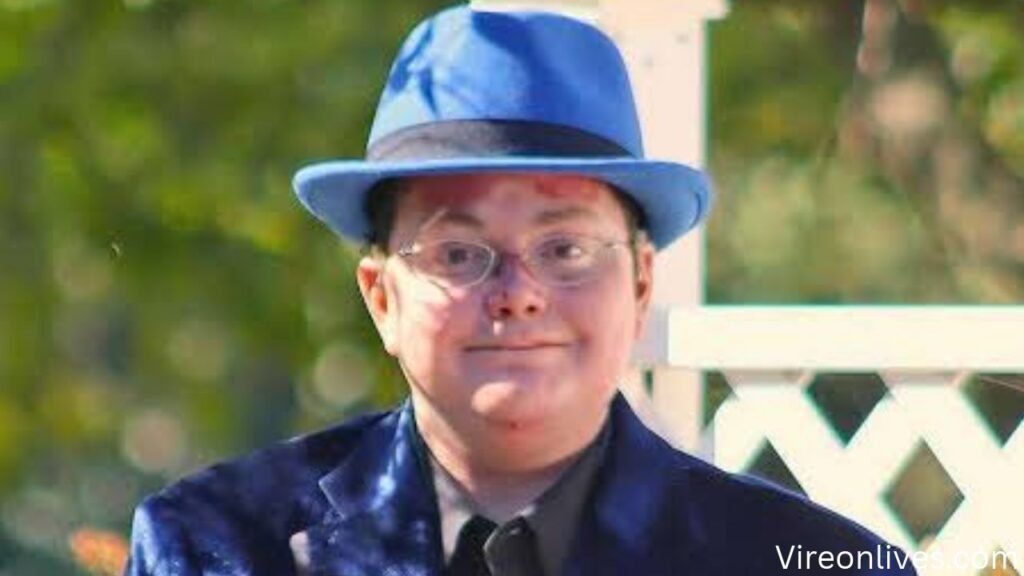
You can also read his obituary and the tributes his friends and family have shared. They show what he cared about most. As of 2026, his mother and community continue to carry that work forward, and they’ve made it easy for others to join.
Personal Information
This section gathers the confirmed basics about Shane DiGiovanna in one place. Details that his family and news outlets haven’t published are left out on purpose.
Full Name
His full name was Shane Patrick DiGiovanna.
Birth Year
Shane DiGiovanna was born in 1998.
Date of Passing
Shane passed away on March 30, 2026, at age 27.
Hometown
Shane lived in Montgomery, Ohio, near Cincinnati.
Education
Shane graduated from Rice University in 2021 as a member of Martel College.
Role
Shane worked as an advocate for people with epidermolysis bullosa and for children facing long hospital stays.
Interests
Shane enjoyed Star Trek, space exploration, politics and political maps.
Parents
His mother is Patsy McCormick.
Frequently Asked Questions
Who was Shane DiGiovanna?
Shane DiGiovanna was a Rice University graduate and advocate from Montgomery, Ohio, who lived with epidermolysis bullosa. He helped inspire the Shane DiGiovanna Act, co-created Doggie’s Friends at Cincinnati Children’s and died on March 30, 2026, at age 27.
How old was Shane DiGiovanna when he died?
He was 27, or 27 and a half years old according to his mother. Rice University reports that he died on March 30, 2026. WKRC noted that 27 is older than most people with EB live. He was born in 1998.
What is epidermolysis bullosa?
Epidermolysis bullosa is a rare genetic condition that makes skin extremely fragile and causes chronic wounds. People often call it butterfly disease. It requires constant bandaging and medical care, and Rice University notes that many people with the condition don’t survive into adulthood.
What is the Shane DiGiovanna Act?
The Shane DiGiovanna Act, H.R. 7877, directs the Department of Health and Human Services to study Medicaid coverage of EB wound care supplies. Congressman Greg Landsman introduced it in March 2026. The House and Senate must approve it before it can become law.
Where did Shane DiGiovanna go to college?
Shane DiGiovanna attended Rice University in Houston, Texas, and graduated in 2021 as a member of Martel College. Rice retrofitted a dorm room for him. He also founded a student-led disability committee within the university’s student government.
What is Doggie’s Friends?
Doggie’s Friends is a charitable initiative at Cincinnati Children’s Hospital that provides stuffed animals to young patients facing long-term treatment. Shane started it after his own stuffed dog, Doggie, comforted him through surgeries. Rice reported more than $160,000 raised as of April 2026.
How much do EB bandages cost?
Shane’s mother, Patsy McCormick, told reporters that bandages alone can cost up to $80,000 a month. Congressman Landsman said the supplies can cost tens of thousands of dollars monthly. Costs vary by patient, and insurance coverage differs by state and plan.
Was Shane DiGiovanna deaf?
Yes. Shane was profoundly deaf and received cochlear implants as a child. Rice University reports that he learned to hear and speak through years of intensive training. His mother says he became an incredible speaker despite that challenge.
Who is Patsy McCormick?
Patsy McCormick is Shane’s mother and primary caregiver. She has spoken to Rice University and local news about his life, the cost of his bandages and his advocacy. She says he kept advocating until the moment he died.
How can you honor Shane DiGiovanna’s legacy?
You can donate to the Doggie’s Friends endowment at Cincinnati Children’s, ask your House member to cosponsor H.R. 7877, and learn about EB through debra of America. Sharing his story also helps. Each step supports the causes he cared about.
Conclusion
Shane DiGiovanna turned a rare diagnosis into a platform for change. He studied at Rice University, founded a student disability committee, inspired a federal bill and created a program that gives comfort to children in hospitals. His mother says he spent his short life loving people and thinking about others.
The practical lesson is simple. Awareness only matters when it leads to action. If you want to honor his work, start with one step. Donate to Doggie’s Friends, ask your representative to cosponsor the Shane DiGiovanna Act, or learn more about epidermolysis bullosa from debra of America.
Those small actions add up. They move his legacy from a story people admire to a cause people join.