

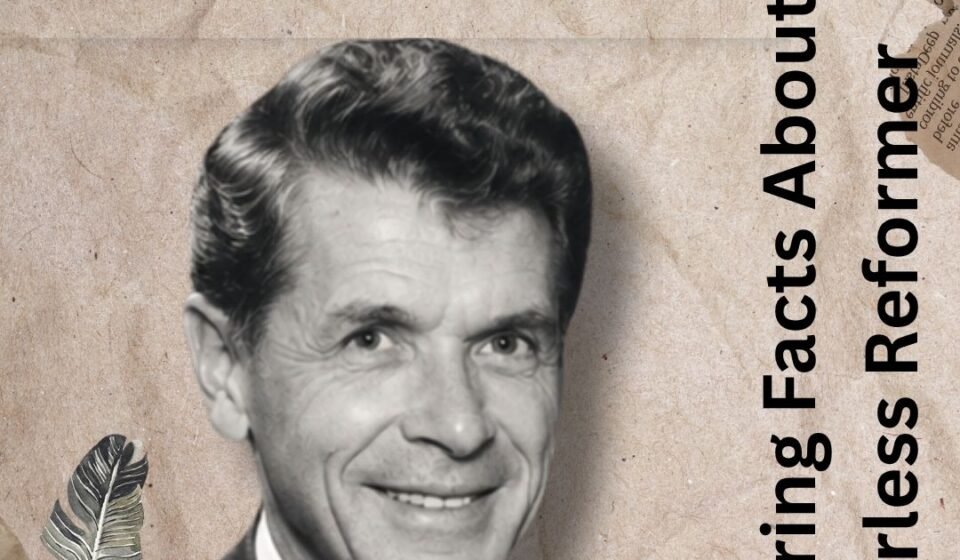

Ronald Wilson spent three decades moving between the courtroom, the church pulpit and a royal commission, ending his career defending some of Australia’s most vulnerable citizens. Born in Geraldton in 1922, he rose from a fatherless, financially struggling household to become Western Australia’s first High Court Justice and later the human rights commissioner who co-authored the landmark Bringing Them Home report.
Ronald Wilson‘s career reads like a study in reinvention: feared Crown Prosecutor, cautious jurist, and finally an outspoken advocate for the Stolen Generations. This article traces his path from wartime Spitfire pilot to national reconciliation figure, and explains why his legacy still shapes debates over Indigenous rights in Australia today.
Early Life Shaped by Loss in Geraldton
Ronald Darling Wilson was born on 23 August 1922 in Geraldton, Western Australia, the fourth son and youngest of five children of solicitor Harold Wilson and his wife, Jean Darling. His mother died when he was just four years old, and at seven his father suffered a debilitating stroke that kept him in hospice care for five years.
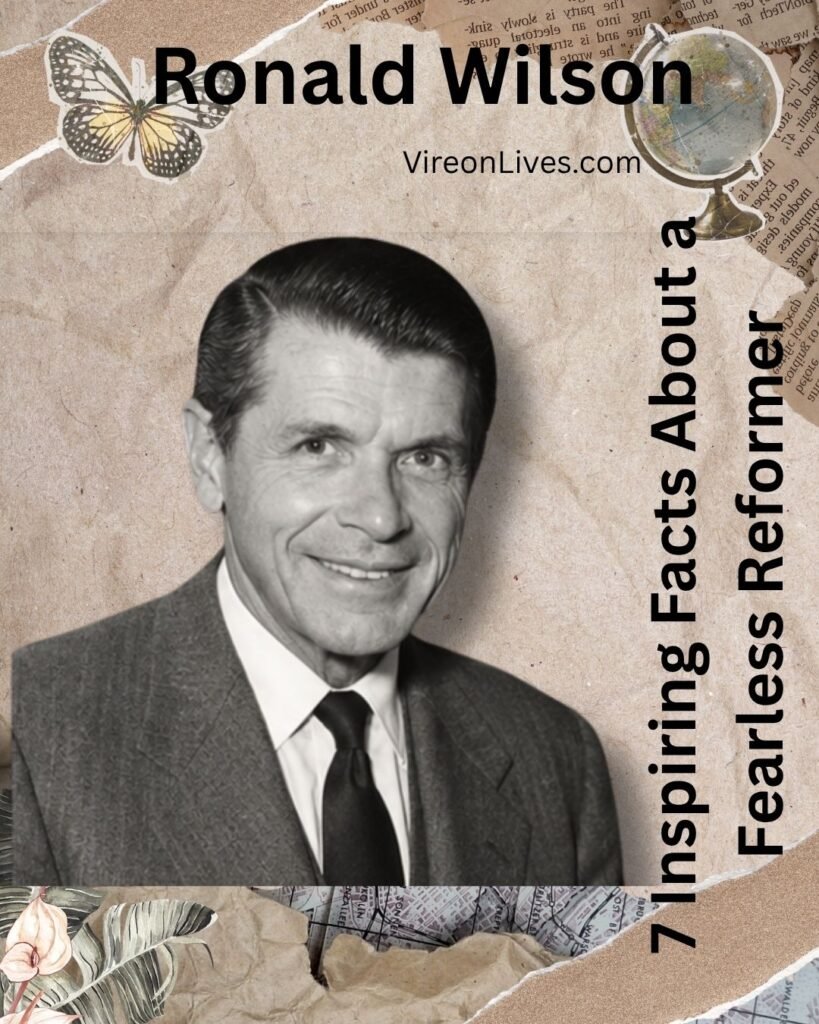
With the family income gone, Ronald’s eldest brother Robert became a father figure, and the household leaned on a housekeeper who Wilson later described as, for all practical purposes, his mother. The Great Depression deepened the strain, and the bank foreclosed on the family home in 1936. At fourteen, Wilson left formal schooling and took a job as a messenger with the Geraldton Local Court, an early brush with the legal world that would define his life.
Quick Facts: Ronald Wilson at a Glance
Before diving into the details of his career, here is a fast reference table covering the essentials of Ronald Wilson’s life and background.
| Field | Details |
|---|---|
| Full Name | Ronald Darling Wilson |
| Nickname | “The Avenging Angel” (as Crown Prosecutor) |
| Gender | Male |
| Date of Birth | 23 August 1922 |
| Date of Death | 15 July 2005 (aged 82) |
| Birthplace | Geraldton, Western Australia |
| Hometown | Geraldton, Western Australia |
| Later Residence | Applecross, Perth, Western Australia |
| Nationality | Australian |
| Ethnicity | Not publicly documented |
| Religion | Christian (Uniting Church of Australia) |
| Education / Degree | University of Western Australia (Law); University of Pennsylvania (LLM) |
| Profession | Crown Prosecutor, Solicitor-General, High Court Justice, Human Rights Commissioner |
| Languages Spoken | English; no other languages publicly documented |
| Hobbies & Interests | Not extensively documented; family recall his regular attendance at his children’s sporting events |
| Marital Status | Married |
| Spouse / Partner | Lady Leila Wilson (née Smith) |
| Children | Five (three sons, two daughters) |
| Father’s Name | Harold Wilson |
| Mother’s Name | Jean Darling |
| Siblings | Youngest of five children; eldest brother Robert helped raise him |
Education and Legal Training Across Two Continents
Despite leaving school at fourteen, Ronald Wilson eventually returned to formal study and trained in law at the University of Western Australia. He was admitted to the Western Australian Bar in 1951, launching a legal career that would move faster than almost anyone else’s in the state.
Wilson later pursued postgraduate study at the University of Pennsylvania in the United States, earning a Master of Laws. That international grounding, paired with his Perth courtroom experience, gave him a breadth of legal thinking that shaped his later work on native title and constitutional questions at the High Court.
Colleagues who studied alongside Wilson often noted how unusual his path looked on paper. He had no formal secondary schooling to speak of, yet he built a legal career on the back of night study, discipline and a memory for detail that courtroom opponents came to respect and fear in equal measure. That self-made quality stayed with him throughout his life, and it shaped how he later mentored younger lawyers within the Western Australian legal fraternity.
Wartime Service as a Royal Australian Air Force Pilot
Before his legal career began in earnest, Ronald Wilson served his country in uniform. He enlisted in the militia in September 1941 and later joined the Royal Australian Air Force, training as a pilot during World War II.
Wilson flew Spitfires with No. 287 Squadron, a Royal Air Force unit, and held the rank of Flying Officer during his service in Europe. He returned to Australia after the war and channelled the same discipline into a legal career, embarking on the path that would eventually take him to the nation’s highest court.
The war years left a lasting mark on Wilson’s outlook. Friends and family later said the experience of combat flying gave him both a sense of duty and a comfort with risk that showed up again decades later, when he was willing to reverse long-held legal positions in public rather than stay silent for the sake of consistency.
Rise to Crown Prosecutor and the Avenging Angel Years
Ronald Wilson’s legal rise was rapid. He became Chief Crown Prosecutor for Western Australia in 1959, just eight years after starting work as a lawyer, and in 1963 he was admitted as Queen’s Counsel, reportedly the youngest in Western Australian history at the time.
As a prosecutor, Wilson earned the nickname the “Avenging Angel” for his relentless courtroom style. He handled several of the state’s most high-profile criminal trials, including those of Eric Cooke, John Button and Darryl Beamish, cases that remain landmarks in Western Australian legal history and still attract scrutiny from legal historians today.
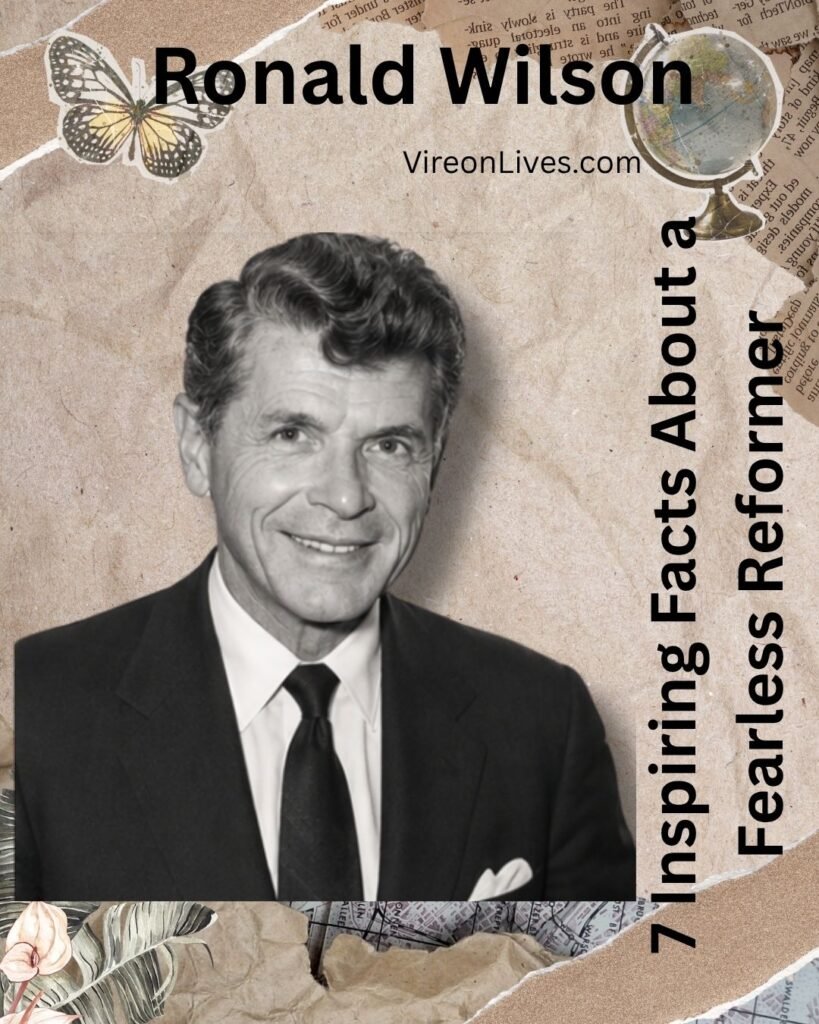
Some of those convictions were later re-examined by courts and campaigners, and both the Button and Beamish cases were eventually the subject of appeals decades after the original trials. Wilson himself rarely spoke publicly about the individual cases in later life, but biographers have pointed to this period as the origin of the tension between duty and conscience that would define his entire career.
Solicitor-General Years and Growing Legal Authority
After his prosecutorial years, Wilson moved into the role of Crown Counsel for Western Australia from 1961 to 1969, before being appointed Solicitor-General of the state, a post he held from 1969 to 1979.
During this decade, Wilson became one of the most senior legal figures in Western Australia, advising government on constitutional and legislative matters. In 1978, he was appointed a Companion of the Order of St Michael and St George, recognition that placed him firmly on the path to national judicial office.
As Solicitor-General, Wilson also began the church leadership work that would later run parallel to his legal career. Balancing the state’s highest legal advisory post with a growing role inside the Uniting Church gave him a public profile that went well beyond the courtroom, and it foreshadowed the more overtly moral, values-driven public life he would lead after retiring from the bench.
Appointment to the High Court of Australia in 1979
In May 1979, Ronald Wilson was nominated by Prime Minister Malcolm Fraser and sworn in as the 28th Justice of the High Court of Australia, becoming the first Western Australian ever appointed to the court. He succeeded Sir Kenneth Jacobs on the bench.
Later that year, Wilson was created a Knight Commander of the Order of the British Empire for his services to law. He served on the High Court until February 1989, when Michael McHugh succeeded him, closing a ten-year chapter defined by careful, states-rights-focused jurisprudence.
Being the first Western Australian ever appointed to the High Court carried symbolic weight in a legal profession still dominated by judges from the eastern states. Wilson’s appointment was widely read at the time as recognition that the western legal fraternity had produced jurists capable of shaping national law, not just interpreting it locally.
Notable Rulings Including the Mabo Native Title Dissent
Wilson’s decade on the bench included sitting on the WA Inc Royal Commission in the early 1990s, an inquiry that later contributed to the jailing of former Premier Brian Burke. His judicial philosophy consistently favoured state authority over federal intervention.
That approach was clearest in Mabo (No 1), decided 4 to 3, where Wilson dissented on a case testing Queensland legislation aimed at extinguishing native title claims. Yet after leaving the bench, Wilson’s views shifted, and he became a public supporter of the recognition of native title delivered in Mabo (No 2) in 1992, and a vocal advocate for Indigenous rights.
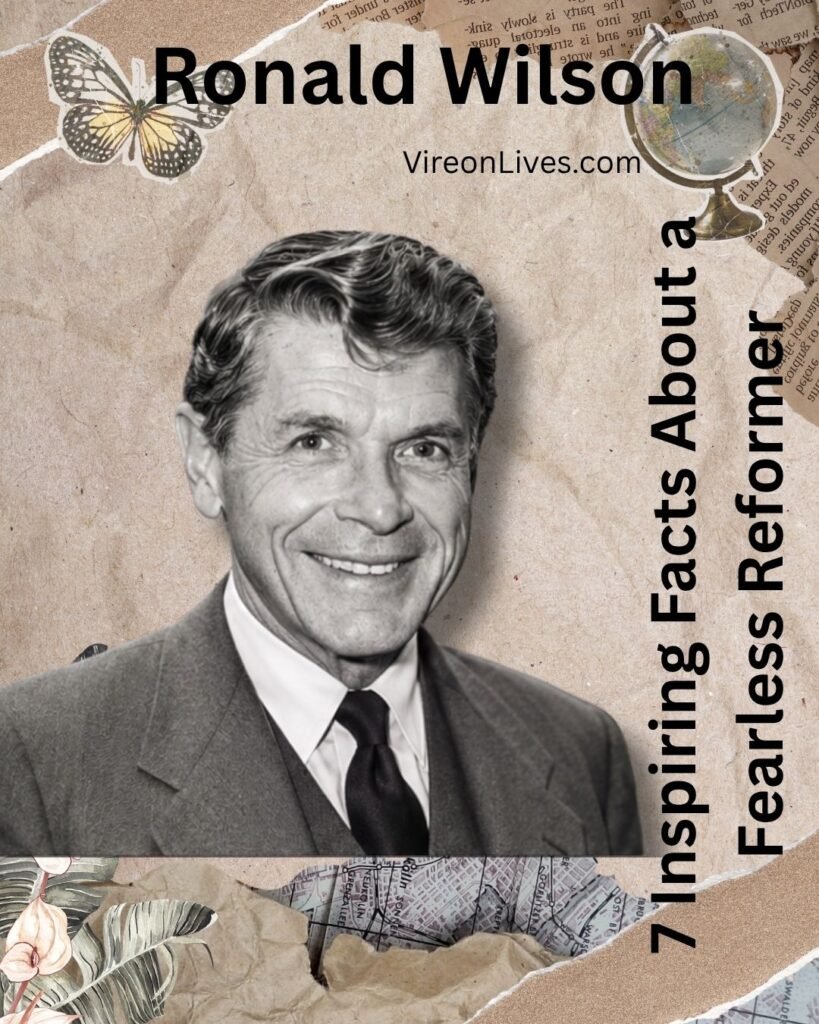
Legal historians still debate what changed between the dissent and the advocate who followed. Biographer Antonio Buti argues the shift was less a reversal than an evolution, with Wilson’s later fieldwork among Aboriginal communities giving him a firsthand understanding of native title questions that the courtroom alone could never have provided.
Leadership Within the Uniting Church of Australia
Faith ran through Ronald Wilson’s entire life. He was a lifelong active participant in the Presbyterian Church and, after church union in the 1970s, the Uniting Church of Australia. He served as Moderator of the WA Synod from 1977 to 1979, even while working as Solicitor-General.
In 1988, Wilson was elected the first non-ordained national president of the Uniting Church of Australia, a position he held until 1991. That role gave him a national platform for the moral and social justice arguments that would define the rest of his public life.
In 1985, Wilson spent three weeks working as a builder’s labourer on an Aboriginal community centre, a hands-on gesture that reflected the faith-driven social justice tradition he had absorbed through the church. He also travelled to Arnhem Land to visit Aboriginal communities directly, and in 1990 he made what he called a pilgrimage to Mapoon in Queensland to apologise for the church’s role in the forced dispersal of that community decades earlier.
President of the Human Rights and Equal Opportunity Commission
In 1990, Ronald Wilson became President of the Human Rights and Equal Opportunity Commission, succeeding Marcus Einfeld. He held the role until 1997, overseeing the commission’s work on discrimination, equal opportunity and Indigenous justice during a pivotal decade.
It was in this role that Wilson took on the assignment that would define his public legacy: chairing the national inquiry into the forced removal of Aboriginal and Torres Strait Islander children from their families, working alongside fellow commissioner Mick Dodson.
The Bringing Them Home Report and Stolen Generations
Between May 1995 and May 1997, Wilson and Mick Dodson led the National Inquiry into the Separation of Aboriginal and Torres Strait Islander Children from Their Families. The Aboriginal Legal Service of Western Australia had already gathered more than 600 personal statements through its Telling Our Story project, material that fed directly into the inquiry.
The resulting 1997 report, known as Bringing Them Home, documented the impact of forced removals on the Stolen Generations and triggered parliamentary apologies from every Australian state and territory between 1997 and 2001. In 2000, an estimated 250,000 to 300,000 people joined a reconciliation walk across the Sydney Harbour Bridge, and in February 2008 Prime Minister Kevin Rudd delivered the formal National Apology, a moment Wilson did not live to see but had spent a decade working toward.
Honours, Awards and Public Recognition
Ronald Wilson’s decades of service brought a long list of honours. He was appointed Companion of the Order of St Michael and St George in 1978, Knight Commander of the Order of the British Empire in 1979, and Companion of the Order of Australia in the 1988 Australia Day Honours.
In 2001, he received the Centenary Medal, and later in life he served as Chancellor of Murdoch University in Perth, lending his name and reputation to the institution long after he had left the bench and the commission behind.
Personal Character, Family Life and Everyday Habits
Away from the courtroom, Wilson married Lady Leila Wilson, née Smith, and the couple raised five children together, three sons and two daughters. Colleagues and family remembered a man whose private habits rarely matched his public reputation for toughness.
When Wilson joined the High Court in 1979, the position came with a government vehicle and chauffeur, but he chose to keep driving his own second-hand Corolla. His children later described him as a devoted father who attended their sporting events and even did the family laundry, details that softened the public image of the once-feared Avenging Angel.
Final Years, Death and Lasting Legacy
Ronald Wilson retired to Perth with Lady Leila, settling in Applecross. In his final year he suffered a series of ischemic attacks, and he died at home on 15 July 2005 at the age of 82, survived by his wife and five children.
Tributes followed from across Australian public life, including from Opposition Leader Kim Beazley and Indigenous leader Mick Dodson. Historian Antonio Buti later chronicled Wilson’s contradictions and convictions in the 2007 biography A Matter of Conscience, published by UWA Press, cementing his place as one of the most complex and consequential figures in modern Australian legal history.
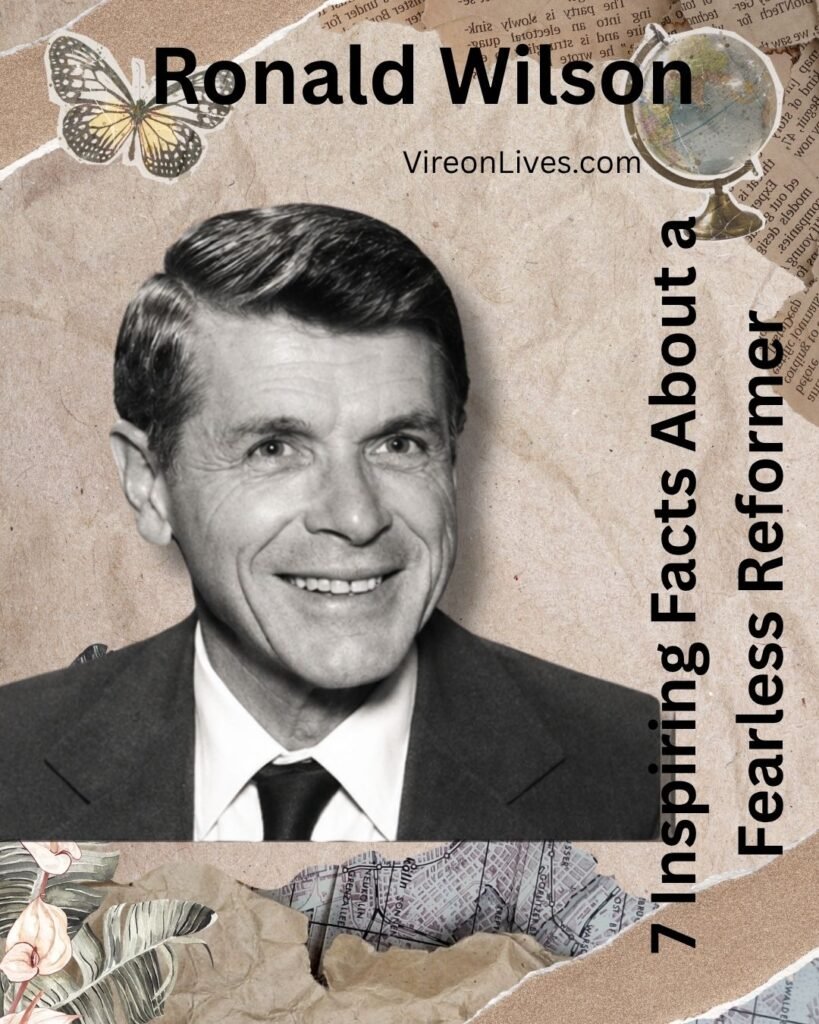
Personal Information of Ronald Wilson
This section brings together the verified personal details of Ronald Wilson’s life, drawn from historical and biographical records. Where a detail was never made public, that is stated plainly rather than guessed at.
Full Name
Ronald Wilson’s full name is Ronald Darling Wilson.
Date of Birth
Ronald Wilson was born on 23 August 1922.
Age
Ronald Wilson died in 2005 at the age of 82; there is no current age, as he is not living as of 2026.
Birthplace
Ronald Wilson was born in Geraldton, Western Australia.
Nationality
Ronald Wilson held Australian nationality.
Ethnicity
Ronald Wilson’s ethnicity was not publicly documented in biographical records.
Religion
Ronald Wilson followed Christianity and was a senior leader within the Uniting Church of Australia.
Education
Ronald Wilson completed a law degree at the University of Western Australia and a Master of Laws at the University of Pennsylvania.
Hobbies
Ronald Wilson’s personal hobbies were not widely documented, though family accounts describe his regular attendance at his children’s sporting events.
Marital Status
Ronald Wilson’s marital status was married.
Spouse or Partner
Ronald Wilson was married to Lady Leila Wilson, née Smith.
Children
Ronald Wilson had five children, three sons and two daughters.
Parents
Ronald Wilson’s father was Harold Wilson, a solicitor, and his mother was Jean Darling.
Siblings
Ronald Wilson was the youngest of five children, and his eldest brother Robert helped raise him after their parents became unable to.
Physical Appearance
Formal physical statistics were rarely recorded for public figures of Ronald Wilson’s era, and no verified measurements beyond his height survive in the historical record. Fields without a documented source are marked accordingly rather than estimated.
Height
Ronald Wilson stood at approximately 5 feet 4 inches (162 cm), as described by his fellow judge Sir Daryl Dawson.
Weight
Ronald Wilson’s weight was not publicly documented.
Eye Color
Ronald Wilson’s eye colour was not publicly documented.
Hair Color
Ronald Wilson’s hair colour was not consistently documented in surviving photographs and records.
Body Type
Ronald Wilson’s body type was not formally documented beyond his recorded small stature.
Skin Tone
Ronald Wilson’s skin tone was not publicly documented.
Shoe Size
Ronald Wilson’s shoe size was not publicly documented.
Tattoos
Ronald Wilson is not documented as having any tattoos.
Piercings
Ronald Wilson is not documented as having any piercings.
Distinctive Features
Ronald Wilson was known for his small stature paired with a forceful presence, once described by a colleague as “the biggest little man” he had ever known.
Social Media Profiles
Ronald Wilson died in July 2005, before Instagram, Twitter, TikTok and other modern platforms became part of public life, and no official or verified social media accounts exist in his name. Coverage of his life is instead preserved through news archives, court records, church publications and Antonio Buti’s 2007 biography, A Matter of Conscience.
Frequently Asked Questions
Who was Ronald Wilson?
Ronald Wilson was an Australian lawyer, High Court Justice, church leader and human rights advocate, best known for co-authoring the 1997 Bringing Them Home report into the Stolen Generations.
When was Ronald Wilson born?
Ronald Wilson was born on 23 August 1922 in Geraldton, Western Australia.
What is Ronald Wilson best known for?
Ronald Wilson is best known for co-authoring the Bringing Them Home report, which documented the forced removal of Aboriginal and Torres Strait Islander children from their families.
Did Ronald Wilson serve in World War II?
Yes. Ronald Wilson served as a pilot in the Royal Australian Air Force during World War II, flying Spitfires with a Royal Air Force squadron in Europe.
When did Ronald Wilson join the High Court of Australia?
Ronald Wilson was sworn in as a Justice of the High Court of Australia on 21 May 1979, serving until February 1989.
What was Ronald Wilson’s role in Bringing Them Home?
Ronald Wilson co-led the national inquiry with Mick Dodson between 1995 and 1997, and the pair authored the resulting Bringing Them Home report.
Was Ronald Wilson religious?
Yes. Ronald Wilson was a devout Christian who served as Moderator of the Uniting Church’s WA Synod and later as national president of the Uniting Church of Australia.
Did Ronald Wilson support native title?
After leaving the High Court, Ronald Wilson became a public supporter of native title recognition, despite having dissented on a related case while still a judge.
How many children did Ronald Wilson have?
Ronald Wilson and his wife, Lady Leila Wilson, had five children together, three sons and two daughters.
What awards did Ronald Wilson receive?
Ronald Wilson received the CMG in 1978, a knighthood (KBE) in 1979, the Order of Australia (AC) in 1988, and the Centenary Medal in 2001.
When did Ronald Wilson die?
Ronald Wilson died at his home in Perth on 15 July 2005, at the age of 82.
Is there a biography of Ronald Wilson?
Yes. Historian Antonio Buti wrote A Matter of Conscience, a biography of Ronald Wilson published by UWA Press in 2007.
Final Thoughts on the Life of Ronald Wilson
Ronald Wilson’s life defies a single label. He was a wartime pilot, a feared prosecutor, a cautious judge and, eventually, one of the country’s most persistent voices for Indigenous justice and reconciliation. Few Australians moved between courtroom, church and royal commission with the same authority he carried into each role.
For anyone researching the Stolen Generations, the history of the High Court, or the intersection of law and faith in Australian public life, Wilson’s career offers a genuine case study in how a person’s views can evolve under the weight of evidence and lived experience. His name remains closely tied to the ongoing work of national reconciliation.